The Announcement Is Not the Work Plan
A coastal policy announcement names an intention; learn to spot the responsibilities, sequence and practical arrangements that make an implementation plan usable.
The common mistake with a coastal policy announcement is to read its promise as a schedule of action. That can leave residents, councils and resource users unsure who is meant to act, what happens first or how a decision reaches the shoreline. An implementation plan answers those questions; an announcement may do none of them.
To tell the difference, look for the working parts below. They reveal whether a proposal has been translated into coordinated public action or remains a statement of intent.
1. Who is responsible for each action?
A plan should name the organisations or roles accountable for specific tasks, not simply refer to “government,” “partners” or “the community.” Coastal work often crosses boundaries: a national agency may set policy, a local authority may manage access, and a port body or landowner may control a relevant site. Naming the actors makes those relationships visible.
Look for verbs attached to an identifiable actor: the council maintains a public access route; an agency maps erosion exposure; a harbour authority coordinates notices to vessel operators. The wording need not identify an individual employee, but it should make clear which institution owns the next action.
Also distinguish responsibility from participation. A community group may be invited to comment without being responsible for delivering a public service. If a document assigns residents a task, it should explain what support, authority and resources accompany that role.
2. What has to happen first?
Actions rarely stand alone. A coastal habitat project may depend on land access, baseline mapping, permits, consultation or coordination with existing maintenance. A useful plan indicates dependencies and sequence: what must be settled before fieldwork, what information informs a later decision, and what can proceed in parallel.
Look for a sequence that makes practical sense rather than a list of ambitions. “Restore dunes” is an outcome, not an order of work. The plan might first identify the site and relevant land interests, then set the restoration approach, arrange access and explain how progress will be reviewed. The exact order depends on the proposal, but the connections should be legible.
If every action appears to start at once, ask what must be in place before each one can begin. Missing dependencies can turn an apparently clear commitment into a queue of unresolved decisions.
3. What practical arrangements are specified?
Implementation needs arrangements that connect policy to a place and its users. These might include how access is managed during works, how affected fishers or ferry operators receive notice, where questions are directed, or how a temporary restriction is communicated. The relevant details differ by project; the point is that the plan considers the day-to-day setting rather than stopping at the desired outcome.
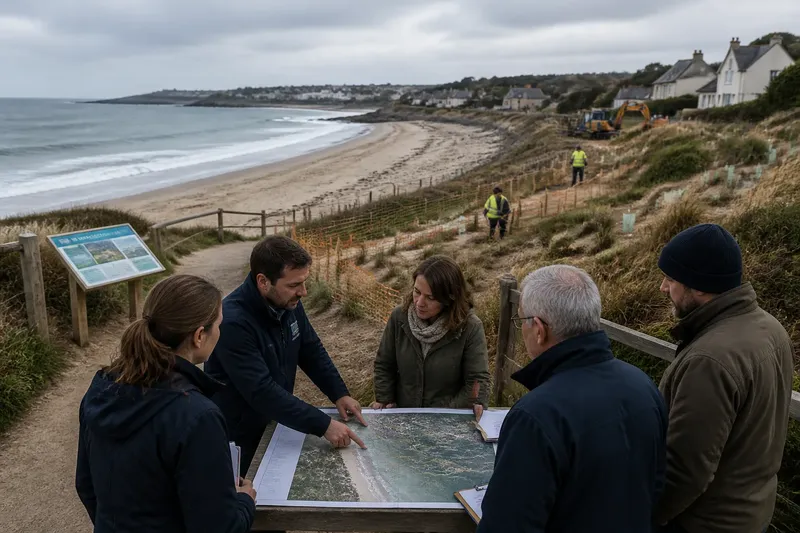
Imagine a council announces dune restoration beside a popular beach. A workable plan could identify the section of shore, explain how the public will be told about temporary path changes, name the office handling access questions and describe how work will be coordinated with local users. Those arrangements let people understand what to expect without pretending every site needs the same approach.
Some details belong in linked documents rather than the plan itself. In that case, the plan should identify the document or process and explain how it fits into delivery, rather than leaving readers to guess where the practical instructions live.
4. How will timing and progress be made visible?
A plan should give readers a way to understand when actions are expected and how progress will be reported. That may mean phases, decision points, a review cycle or a description of what must happen before a later stage begins. A precise calendar is not always possible, especially where weather, access or approvals affect coastal work. But uncertainty should be described, not hidden behind a vague promise to act soon.
Look for the difference between a date for a decision and a date for physical work. A policy may commit to preparing a management approach before any shoreline intervention is considered. Treating those as the same milestone can create false expectations.
Progress information should also have a route to readers: a public update, a named committee report or an accessible project record. Without that route, even a well-intentioned schedule is difficult to follow from outside the delivery team.
5. What resources and authority support delivery?
Responsibilities require capacity. A credible plan explains, at an appropriate level, what staff capability, funding process, equipment, access rights or decision-making authority the work depends on. It need not disclose every internal detail. It should, however, show whether the named actors can take the actions assigned to them or must first secure another approval or resource.
Watch for the difference between a funding announcement and a delivery arrangement. Money earmarked for a broad coastal purpose does not, by itself, explain which organisation can use it, what conditions apply or how competing needs will be considered. Similarly, a promise to coordinate does not say who convenes the relevant bodies or resolves a disagreement.
Where authority or funding remains pending, a plan can still be candid and useful by identifying the outstanding decision and who is expected to make it. That is more informative than presenting an unresolved dependency as settled work.
6. How are affected people and other plans brought in?
Coastal choices can affect residents, businesses, visitors, resource users and neighbouring jurisdictions in different ways. A plan should say how relevant input is gathered, when people can contribute and how that input relates to decisions. “Engagement will take place” is only a headline unless readers can see its purpose and place in the sequence.
Coordination matters too. Shoreline actions may interact with flood management, habitat protections, navigation, public access or local development decisions. The plan should identify important links and explain which body handles them. This is not a demand that one document reproduce every policy; it is a way to see whether the delivery team knows where its work touches other responsibilities.
When the correct approach depends on a specific permit, governing authority or local rule, check the relevant agency guidance and applicable requirements rather than treating a general plan as a substitute.
7. What do readers commonly ask about a coastal work plan?
Can an announcement still be useful?
Yes. It can establish a public intention, define an issue or signal that officials will develop a response. The distinction is simply that an announcement alone may not assign tasks or explain delivery.
Does every plan need exact dates?
No. A plan can use phases or decision points where conditions remain uncertain. It should still show what triggers the next stage and how readers will learn about changes.
What if several agencies share responsibility?
Shared responsibility can be appropriate, but the document should describe each agency’s role and how coordination works. If no one is identifiable as the lead for a task, ask who convenes the group and tracks the decision.
Where should I look when the plan is brief?
Check for linked schedules, agency guidance, meeting records or project pages named in the document. A brief plan can rely on supporting material, but those references should point to the practical detail rather than merely repeat the announcement.
8. What is not worth the effort?
Do not try to judge a plan by the number of pages, polished diagrams or confident language. A short document may assign work clearly, while a long one may leave ownership and dependencies blurred. Nor is it useful to demand operational detail unrelated to the decision at hand; focus on the tasks, actors and arrangements that determine whether this particular coastal commitment can proceed.
For a quick read of any coastal implementation plan, trace one promised outcome all the way through: who acts, what must come first, what practical arrangements are named, and how progress becomes visible. That simple trail is often enough to show whether the document is an announcement in plan-like clothing or a genuine account of how work is meant to happen.